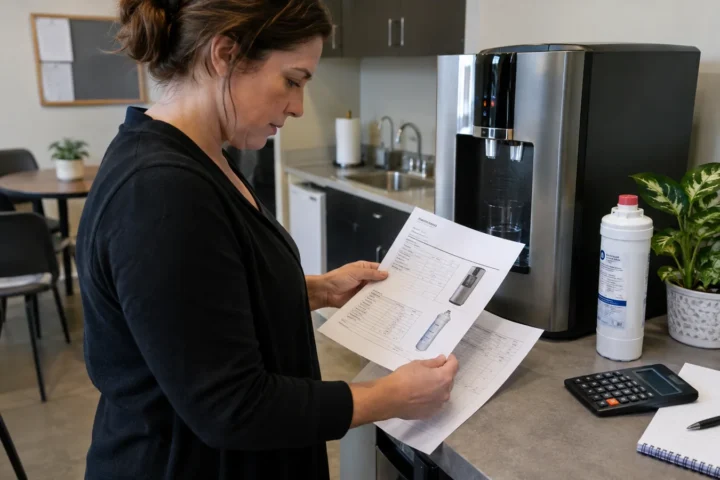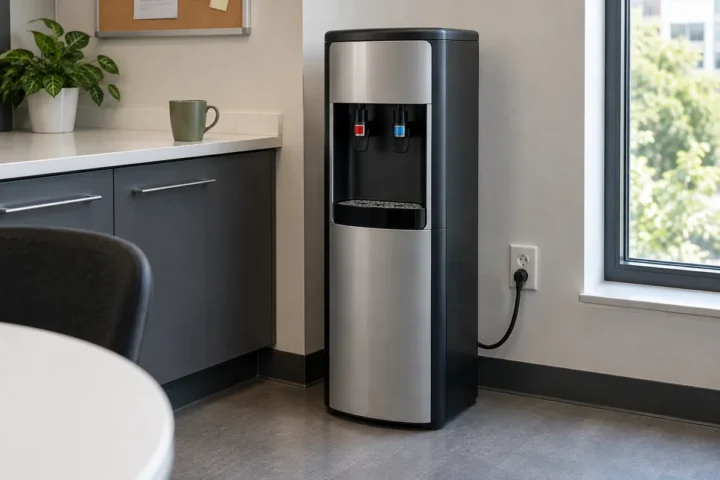
Office water service cost is rarely one universal monthly number. A small office using a basic cold-water unit has a different requirement from a multi-floor workplace that needs hot, cold and ambient water at several high-traffic points. Bottled delivery adds volume and route considerations. Bottleless service adds filtration, installation and preventive-maintenance questions. The responsible comparison is the complete operating cost for a defined workplace—not the lowest advertised rate.
In practice, the largest pricing mistakes happen when buyers compare different scopes: one quote includes filter changes and repairs, another excludes installation, and a third assumes far less usage than the office actually has. For the broad purchasing framework, use the office water service guide and the separate water delivery pricing guide.
What changes office water service pricing?
Service type sets the cost structure
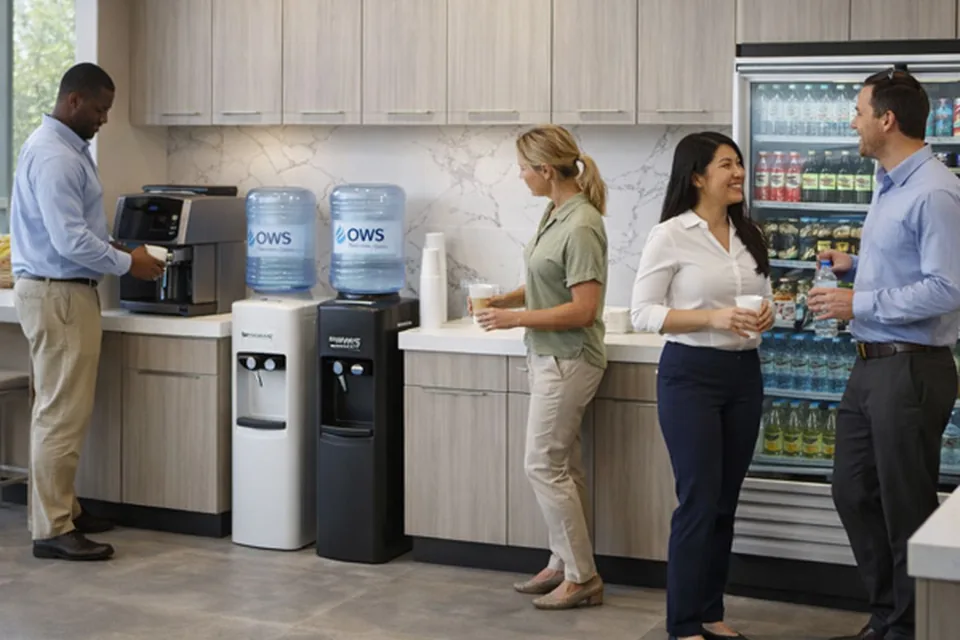
Bottleless service is commonly structured as a monthly equipment and service plan. Bottled delivery is usually driven by bottles consumed, route frequency, cooler rental and related charges. Neither structure is automatically cheaper at every volume.
Headcount is only the starting point
Visitors, shift patterns, climate, coffee and tea use, remote-work schedules and existing drinking-water access all affect demand. Peak use matters because an undersized unit can recover too slowly even when average daily volume appears adequate.
Installation conditions change the first-year total
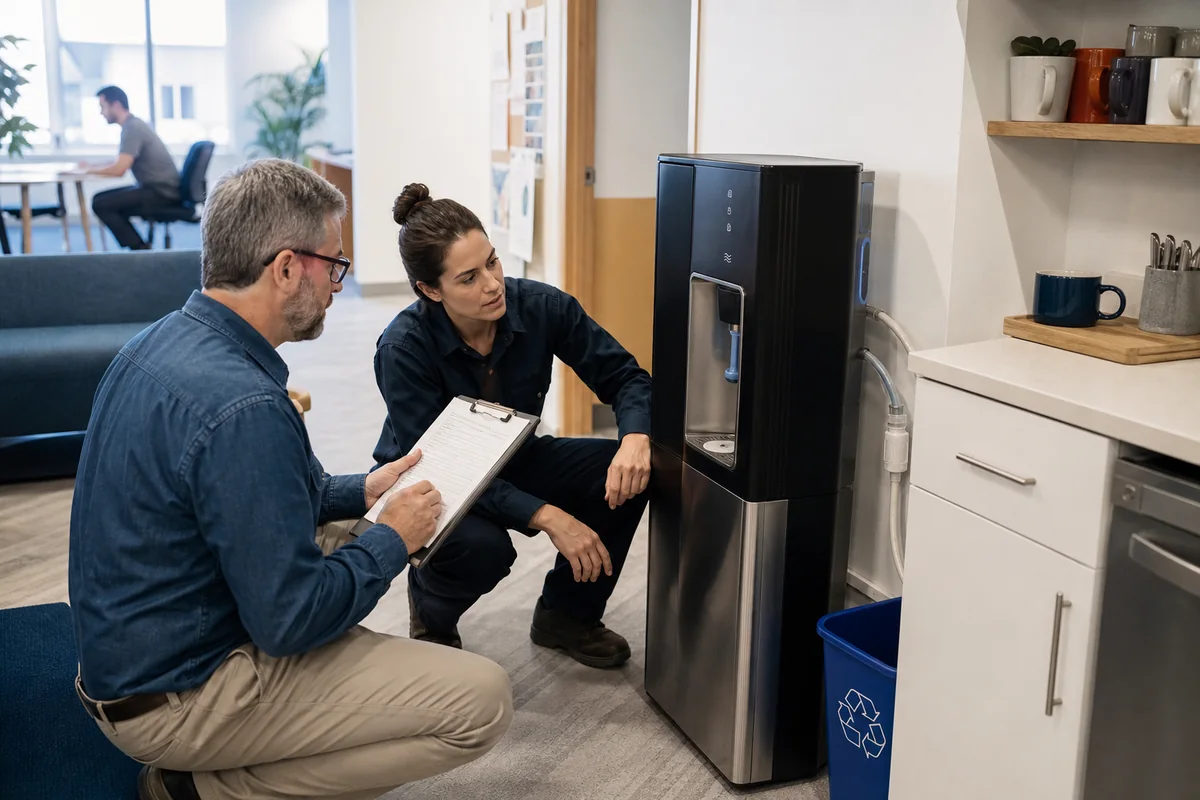
Bottleless equipment needs a suitable water source, power and a safe route for tubing. Long runs, wall penetrations, protected tubing, drainage or after-hours access may change installation cost. Bottled systems avoid a water-line connection but require safe storage and handling space.
Maintenance belongs in the comparison
Confirm filter replacement, sanitizing, preventive visits, repairs, consumables and emergency response. A low base price can become expensive when predictable service items are separate.
Build a complete cost comparison
- Monthly service: Equipment rental or lease, included service and any minimum commitment.
- Usage charges: Per-bottle pricing, delivery minimums, deposits, fuel or route charges where applicable.
- Installation: Standard work, nonstandard plumbing, electrical work and restoration responsibilities.
- Lifecycle service: Filters, sanitation, repairs, replacement equipment and removal at the end of service.
A practical planning checklist
- Record actual onsite headcount by shift and typical visitor volume.
- Map the places where employees naturally seek water instead of choosing locations only by plumbing convenience.
- Estimate bottled usage from current invoices or measure bottle changes for several representative weeks.
- Ask every provider to quote the same dispenser features and maintenance scope.
- Compare first-year and three-year totals, not only the opening monthly price.
A common office pattern is to add a second dispenser after launch because one centrally located unit creates a line at lunch. Planning around peak use and walking distance is usually less expensive than correcting an undersized layout later.
Questions to ask before signing a service agreement
- What is included in the monthly fee?
- Which installation conditions create an added charge?
- How often are filters changed and units sanitized?
- Are delivery, bottle deposits or fuel charges separate?
- What happens if the workplace grows or a unit needs to move?
- How are price increases and cancellation handled?
A useful proposal should state the equipment, installation work, filter or bottle schedule, preventive service, response process, term, price changes and end-of-agreement responsibilities. Compare each provider against the same written scope. That is more reliable than comparing a promotional monthly number with an incomplete list of inclusions.
Frequently asked questions
Is bottleless office water always less expensive?
No. It often becomes attractive at moderate or high volume because water is not purchased by the bottle, but site conditions, equipment level and service terms still matter.
Should installation be free?
Some standard installations are included. Ask what “standard” means and who is responsible for nonstandard plumbing, electrical work, permits or wall restoration.
How many quotes should an office compare?
There is no fixed number. Compare enough qualified options to understand differences in scope, equipment, service and contract terms, using the same requirements for each.
The next step
Document the number of users, locations, desired temperatures, existing water access and service expectations before requesting prices. When the requirements are clear, compare office water service prices using the same facts for every option. You can also browse the office water FAQ center for focused answers about installation, filtration and ongoing service.