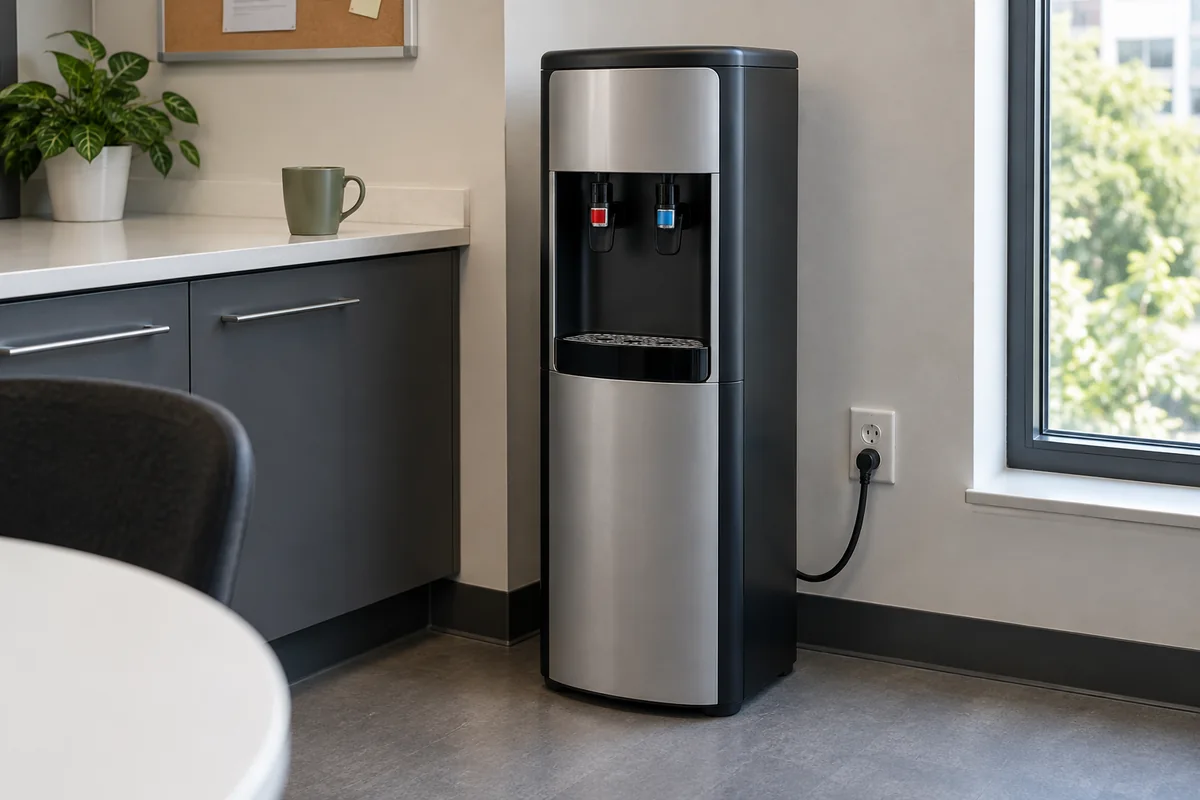
A water cooler can spend much of its working day keeping water hot or cold between drinks. That makes standby operation worth asking about, particularly when you’re choosing several units. Don’t assume a bottleless cooler always uses less electricity than a bottled model: temperature functions, insulation and controls matter too.
How much electricity does an office water cooler use?
The answer depends on the exact model, its settings, room conditions and how it’s used. Ask for the manufacturer’s consumption figures and the conditions behind them. A rated wattage describes power at a particular operating state; it doesn’t mean the cooler draws that amount continuously for 24 hours.
Start with the equipment options in our office water cooler energy use guide. When you compare water cooler prices, ask each provider to identify the proposed model rather than quoting only “hot and cold cooler.”
Compare hot, cold and ambient water requirements
List what people actually need. If hot water is rarely used, ask whether the heater can be disabled independently without affecting safe operation or the service agreement. If hot water is important for the breakroom, check both its energy characteristics and its usable capacity. An undersized unit can disappoint staff even if its advertised consumption looks attractive.
Check documented sleep modes or timers and how the unit recovers when employees arrive. Follow the manufacturer’s instructions; don’t add a timer or switch power off simply because it seems convenient. Some models have maintenance or operating requirements that make an improvised routine inappropriate.
Use measured consumption to estimate running cost
If the supplier provides a reliable kilowatt-hour figure for a stated period, multiply it by your applicable electricity rate to estimate energy cost. Keep the period consistent when comparing models. Include standby operation, not just dispensing. For an existing unit, a qualified facilities person can help choose an appropriate measurement method rather than guessing from the nameplate.
Electricity is only one part of water cooler costs. Rental, filters, delivery and repair terms may carry more weight in the total. Our water service comparison keeps those categories together.
Does bottleless water automatically cost less to operate?
No. Bottleless equipment avoids bottle delivery and storage, but has installation and maintenance considerations. Compare bottleless water coolers with the specific bottled alternative, using the same temperature requirements and realistic consumption.
Can maintenance affect cooler performance?
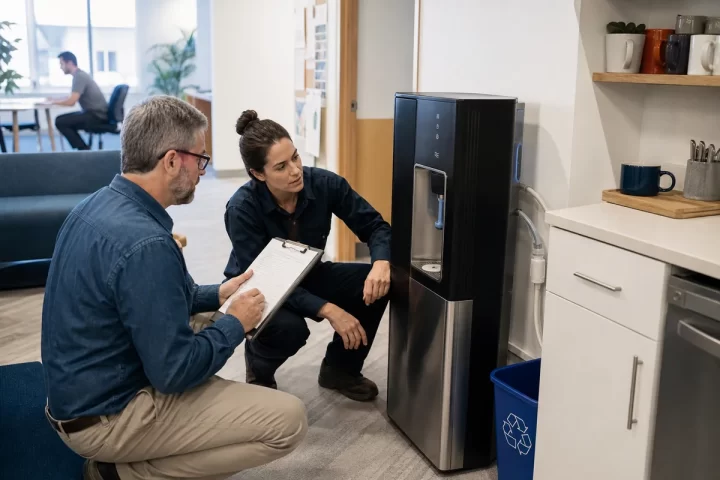
Maintenance helps equipment operate as intended, but don’t attach an unsupported energy-saving percentage to a cleaning visit. Follow the supplier’s cooler maintenance requirements and report unusual noise, heat or reduced cooling. Send your preferred temperature functions and operating hours with the quote request so providers can propose a suitable model.
Ready to request service? Compare office water offers with your requirements in hand.