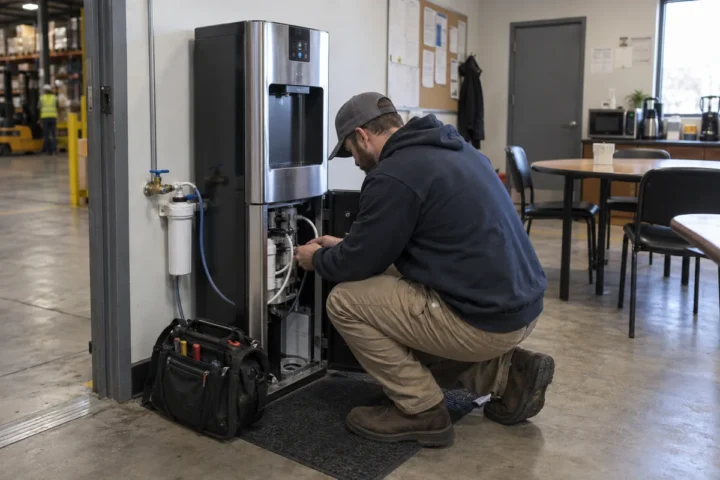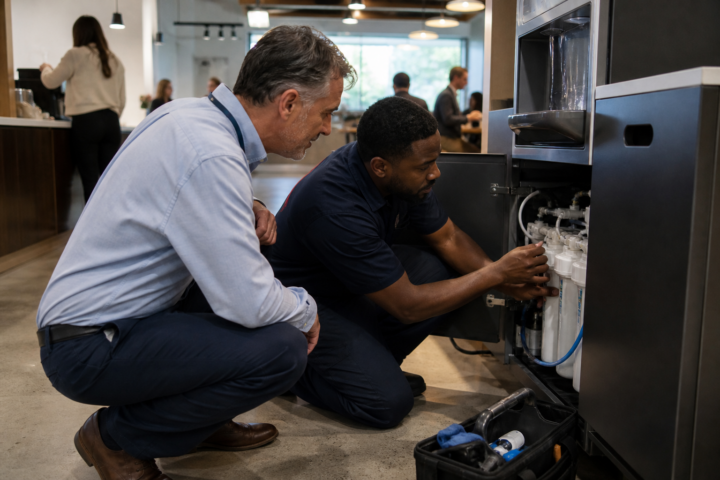

The bottleless-versus-bottled decision is really a comparison between two operating systems. A bottleless cooler treats the building water at the point of use and requires a water connection, power and scheduled filter service. Bottled delivery brings a separate water supply on a route and requires bottle storage, lifting and reliable inventory. Both can provide dependable workplace hydration when the equipment and service plan match the site.
The best decision starts with the building constraints, expected demand and acceptable staff involvement. Sustainability and price matter, but a solution that cannot be installed safely or supported consistently is not a good fit. For the broad purchasing framework, use the office water service guide and the separate water delivery pricing guide.
Compare the day-to-day operating differences
Bottleless removes bottle handling
Point-of-use equipment eliminates jug storage and replacement. It can suit busy offices, but the building water and filtration design must be evaluated instead of assuming every filter train solves every water-quality concern.
Bottled service is flexible about plumbing
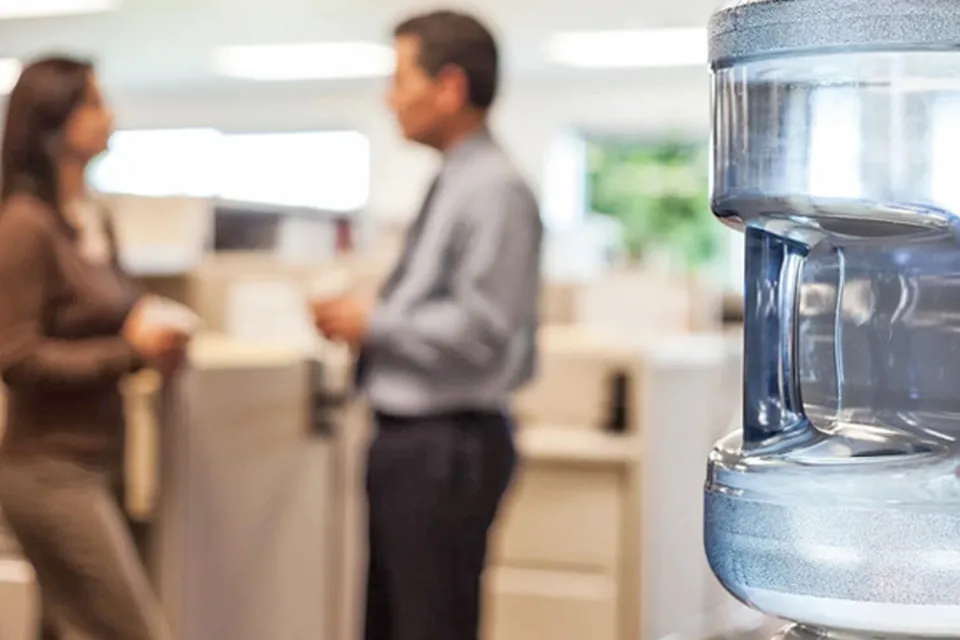
A bottled cooler can be placed where water-line access is impractical. That flexibility comes with scheduled deliveries, empty-bottle management and safe lifting or replacement procedures.
Water quality requires a specific answer
Ask what the proposed filtration removes, what it does not remove and how performance is maintained. For bottled service, review the supplied water, sealed-bottle handling and cooler sanitation process.
Service failures look different
A bottleless unit can be affected by filters, valves, power or the building water supply. Bottled service can be affected by inventory, route delays or empty-bottle storage. The response plan should reflect the actual failure mode.
Where each option tends to fit
- Bottleless: Moderate-to-high use, dependable plumbing access, limited storage and a preference for predictable service.
- Bottled: Temporary sites, low-use areas, difficult plumbing access or workplaces that prefer a delivered water source.
- Hybrid: Campuses with bottleless units in primary areas and bottled service in remote, temporary or low-use spaces.
- Neither by default: A small team with safe, acceptable tap water may need only a simple filtered faucet or countertop approach.
A practical planning checklist
- Inspect water, electrical and drainage conditions at every intended dispenser location.
- Measure actual weekly demand and peak-hour use.
- Identify storage and lifting constraints for full and empty bottles.
- Review water-quality goals with the proposed treatment method in writing.
- Compare service response, sanitation and replacement-equipment procedures.
In multi-floor offices, the equipment decision is often mixed. High-use break rooms may justify bottleless units, while a remote conference area may be better served by a simpler option. Forcing one design everywhere can create unnecessary cost or awkward installations.
Questions to ask before signing a service agreement
- What filtration stages are included and why?
- How is the unit sanitized?
- Who moves and stores bottles safely?
- What is the expected service response time?
- Can equipment be added, moved or exchanged as use changes?
- Which charges apply beyond the base monthly rate?
A useful proposal should state the equipment, installation work, filter or bottle schedule, preventive service, response process, term, price changes and end-of-agreement responsibilities. Compare each provider against the same written scope. That is more reliable than comparing a promotional monthly number with an incomplete list of inclusions.
Frequently asked questions
Does bottleless water mean unlimited capacity?
No. The source is continuous, but a unit still has flow, cooling and heating limits. Size it around peak demand and recovery rate.
Is bottled water automatically purer?
Not automatically. Quality depends on the water source, treatment, handling and cooler sanitation. Compare specific standards and service practices.
Can a leased office install a bottleless cooler?
Often, but the property manager or lease may control plumbing penetrations and restoration. Obtain approval before installation.
The next step
Write down why the workplace is considering a change—cost, storage, taste, service reliability, sustainability or capacity—and evaluate each option against that priority. When the requirements are clear, compare office water service prices using the same facts for every option. You can also browse the office water FAQ center for focused answers about installation, filtration and ongoing service.