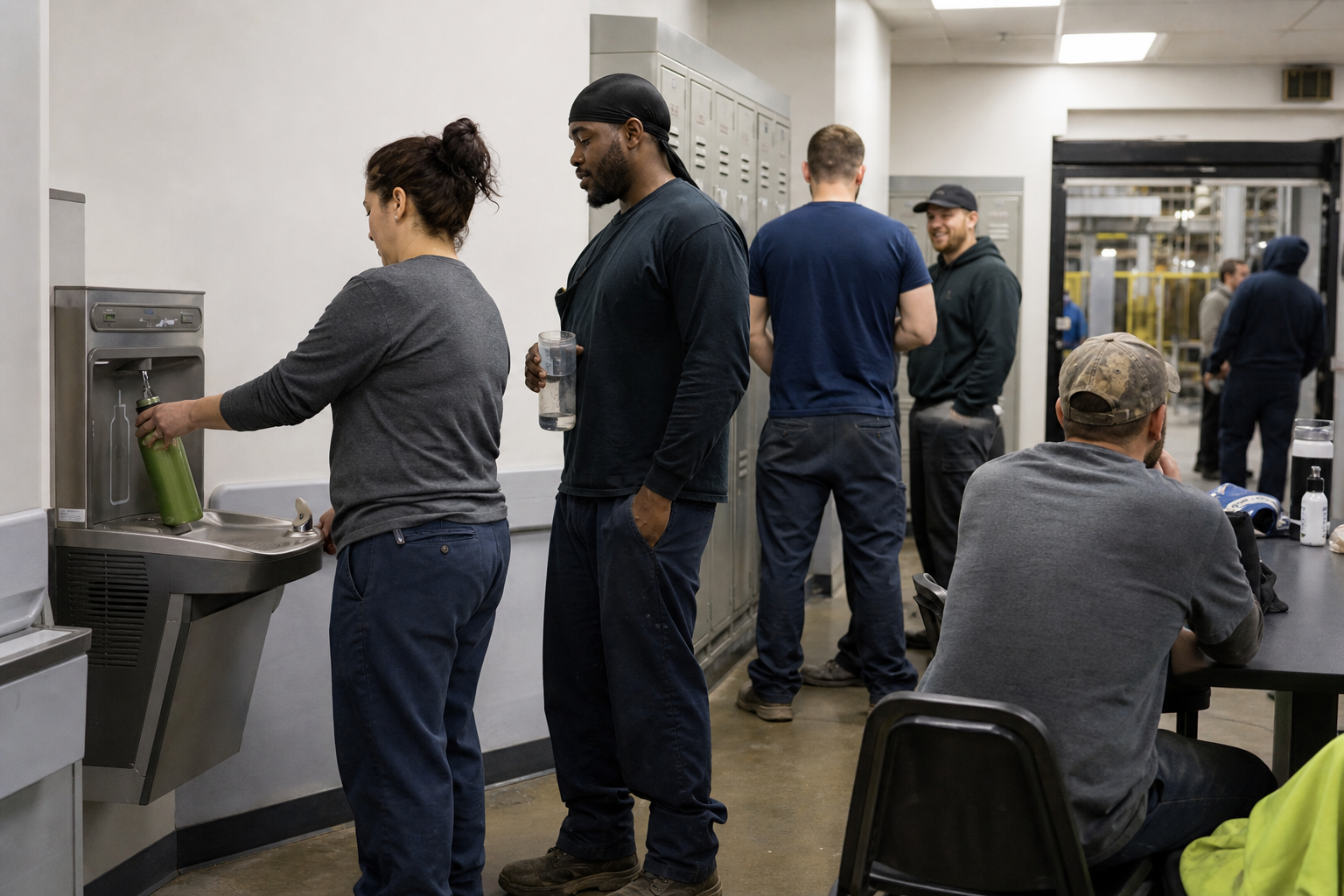
A manufacturing breakroom does not use water like a nine-to-five office. Demand arrives in short, heavy waves at shift changes and scheduled breaks. Equipment must recover quickly, remain easy to clean and avoid creating traffic around production routes.
Measure peak demand by break window
Employee count alone is incomplete. Record shift size, break duration, bottle-filling behavior, ambient temperature and whether one station serves several departments. Size for the busiest practical interval.
Choose placement with operations
Locate stations near the people who use them but outside forklift aisles, electrical hazards and congested exits. Confirm potable-water connection, drainage requirements, power and service clearance.
Plan hygiene and service access
High-touch areas need a defined cleaning owner. Service technicians should be able to isolate water and work without disrupting production. Multi-location teams benefit from asset IDs and common replacement standards.
Compare bottled and bottleless models
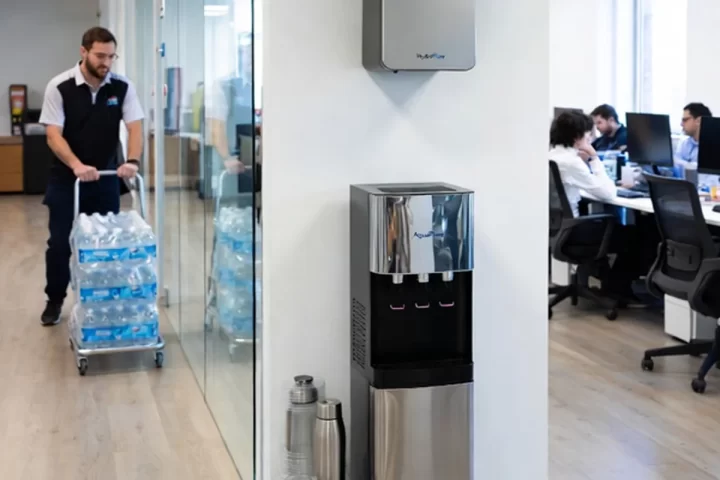
Bottled delivery may fit flexible or temporary areas; plumbed-in systems reduce bottle handling where utilities are available. Compare the full office water service cost, including delivery, filters, equipment, installation and service response.
Ready to compare practical options? Provide shift counts, break windows and proposed locations to compare practical workplace water options.
Frequently asked questions
How many coolers does a plant need?
Use walking distance, shift peaks, station recovery and redundancy rather than one employee ratio.
Can a cooler be placed on a production floor?
Only after reviewing traffic, sanitation, utilities, environmental conditions and site safety rules.
Should every location use the same model?
Standardization helps service and parts, but local capacity and water conditions may justify variations.