Call centers are not typical offices when it comes to shared amenities. A large group can stand up at once, breaks are timed, floor space is tight and a dispenser problem becomes noticeable quickly.
Compare office water costs using headcount by shift and actual break patterns.
Plan for the five-minute rush
A station that serves average hourly use may still create a line at the top of every break. Observe walking paths, queue space and how long bottles take to fill. Two modest stations can outperform one premium unit placed in the wrong room.
A customer-support center moving to two shifts
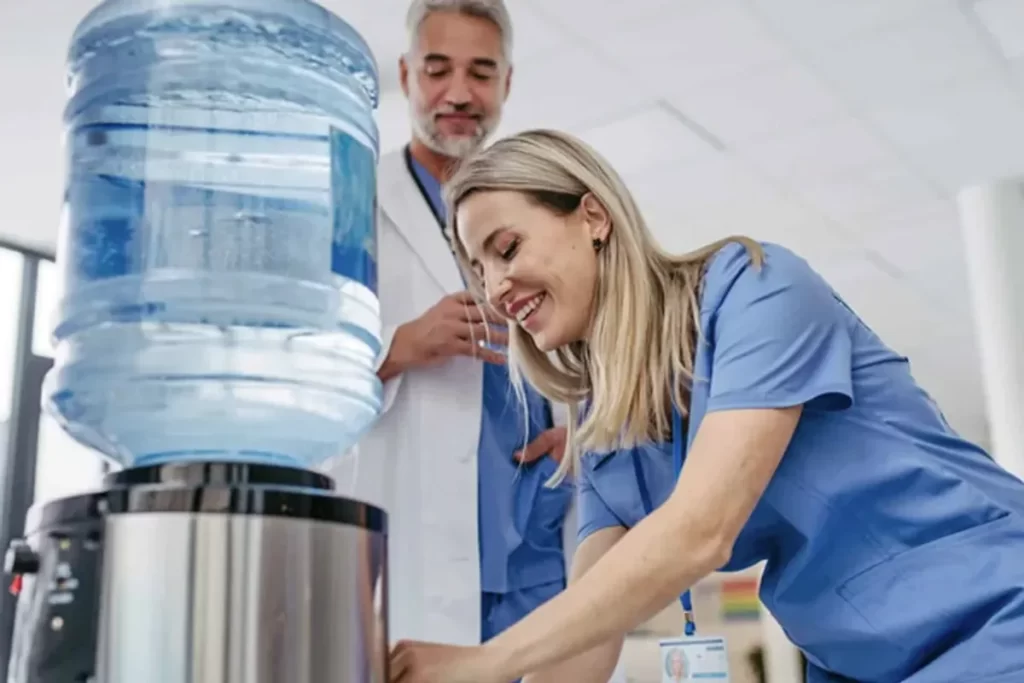
A 120-seat center extends operating hours without changing the break-room layout. The existing bottled cooler runs empty late in the day, and replacement bottles block storage space near the kitchenette.
Facilities adds one bottleless station near each end of the floor and retains a small emergency supply. Usage is distributed, and supervisors no longer manage deliveries during shift handoff.
Count people by shift
Total employment can overstate or understate simultaneous demand.
Watch walking paths
A station should not create cross-traffic through active work areas.
Compare recovery performance
Chilled capacity and dispensing rate matter at break time.
Plan after-hours support
Know how issues are reported when facilities staff are absent.
Monitor before expanding
Usage data and staff feedback can guide a second phase.
Questions worth asking before you choose
- How many people break at the same time?
- Where can a short queue form safely?
- Will one unit recover between groups?
- Who reports leaks or failures after hours?
- Is bottled storage creating hidden work?
What a useful proposal should make clear
A useful office water proposal identifies the service model, dispenser or cooler equipment, filtration stages, expected capacity, installation requirements, sanitation schedule, consumables, response process, recurring price, optional charges, term and removal responsibilities.
A practical next step
Include shift counts when requesting call-center water service prices.
Frequently asked questions
How many dispensers does a call center need?
It depends on concurrent use, layout, fill time and redundancy.
Is bottleless service better for multiple shifts?
It can reduce bottle handling, but plumbing and service must be suitable.
Should a station be inside the main floor?
Choose a location that balances access, noise, traffic and facility rules.