
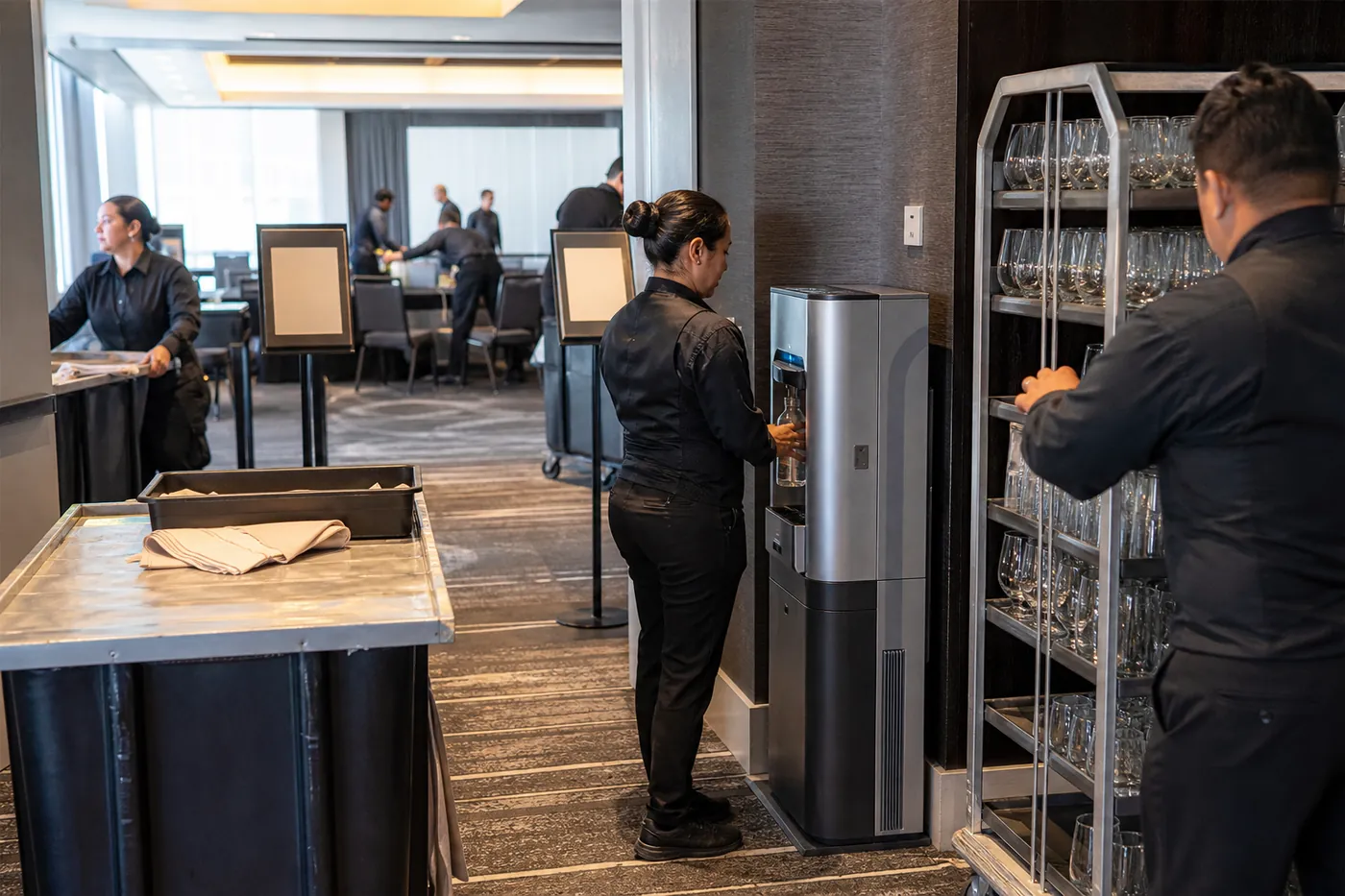
Hotels and conference venues do not have one uniform water-service requirement. Front-desk and administrative employees use water throughout the day. Banquet and housekeeping teams create concentrated back-of-house demand. Meeting attendees expect convenient service that looks intentional. Occupancy and event schedules can change sharply from one day to the next. A reliable program separates those use cases and assigns the right equipment and service level to each.
Start with a venue map and event calendar. The multi-location service framework also works for properties with several buildings or managed venues, while the cleaning and maintenance checklist supports consistent records.
Start with the operating environment
Separate guest service from employee hydration
Guest-facing water may be handled through banquet service, refill stations or meeting-room programs. Staff need dependable access that remains available during event setup and room turnover. Do not make back-of-house employees depend on a guest station that disappears when a ballroom closes.
Size around the event schedule
The same property may host a small meeting and a thousand-person conference in the same week. Use banquet event orders and staffing plans to estimate peaks. Fixed dispensers can support routine demand, while large events may require supplemental capacity or a separate service method.
Design for carts, service corridors and housekeeping
Equipment should not narrow service routes or conflict with linen, food-service or waste movement. Tubing and power cords need protection. Bottle storage must remain clean and secure without consuming valuable staging space.
Document sanitation across departments
Facilities, food and beverage, housekeeping and the water provider may all touch part of the program. Define who cleans exterior surfaces, who performs internal sanitation, who checks filters and who reports a concern. Shared assumptions create missed tasks.
Plan for high-visibility failures
A conference-floor outage during a major event creates immediate pressure. Confirm service escalation, replacement equipment and the onsite backup plan. Unit identifiers and a single dispatch contact help staff describe the problem accurately.
Planning checklist
- Map staff, guest, meeting and back-of-house water needs separately.
- Use the event calendar and largest staffing periods to define peaks.
- Protect equipment from carts and keep service corridors clear.
- Write the sanitation and inspection split across departments.
- Require equipment-level maintenance records.
- Confirm supplemental capacity and emergency replacement procedures.
For additional facilities context, consult CDC drinking-water preparedness resources. Apply outside guidance to the actual building, equipment and local requirements rather than treating a general resource as a substitute for a site review.
Frequently asked questions
Can one water system serve both hotel guests and employees?
It can in some layouts, but separate guest and staff programs often provide better capacity, presentation and operating control.
How should conference demand be estimated?
Use event attendance, session timing, room turnover, beverage service and staff population. Plan for the highest simultaneous period rather than an annual average.
Are bottleless coolers appropriate for hotels?
Yes where plumbing, treatment, capacity, service access and appearance fit the location. Bottled or supplemental service may still be useful for temporary event demand.
What should a venue require from a provider?
Require a clear equipment list, treatment and filter schedule, sanitation scope, response time, escalation contact, replacement process and complete recurring charges.
Compare a complete service scope
A hospitality proposal should show how routine service and peak events are supported without disrupting guests or back-of-house work. Give each provider the same venue profile before you compare commercial water service prices.