
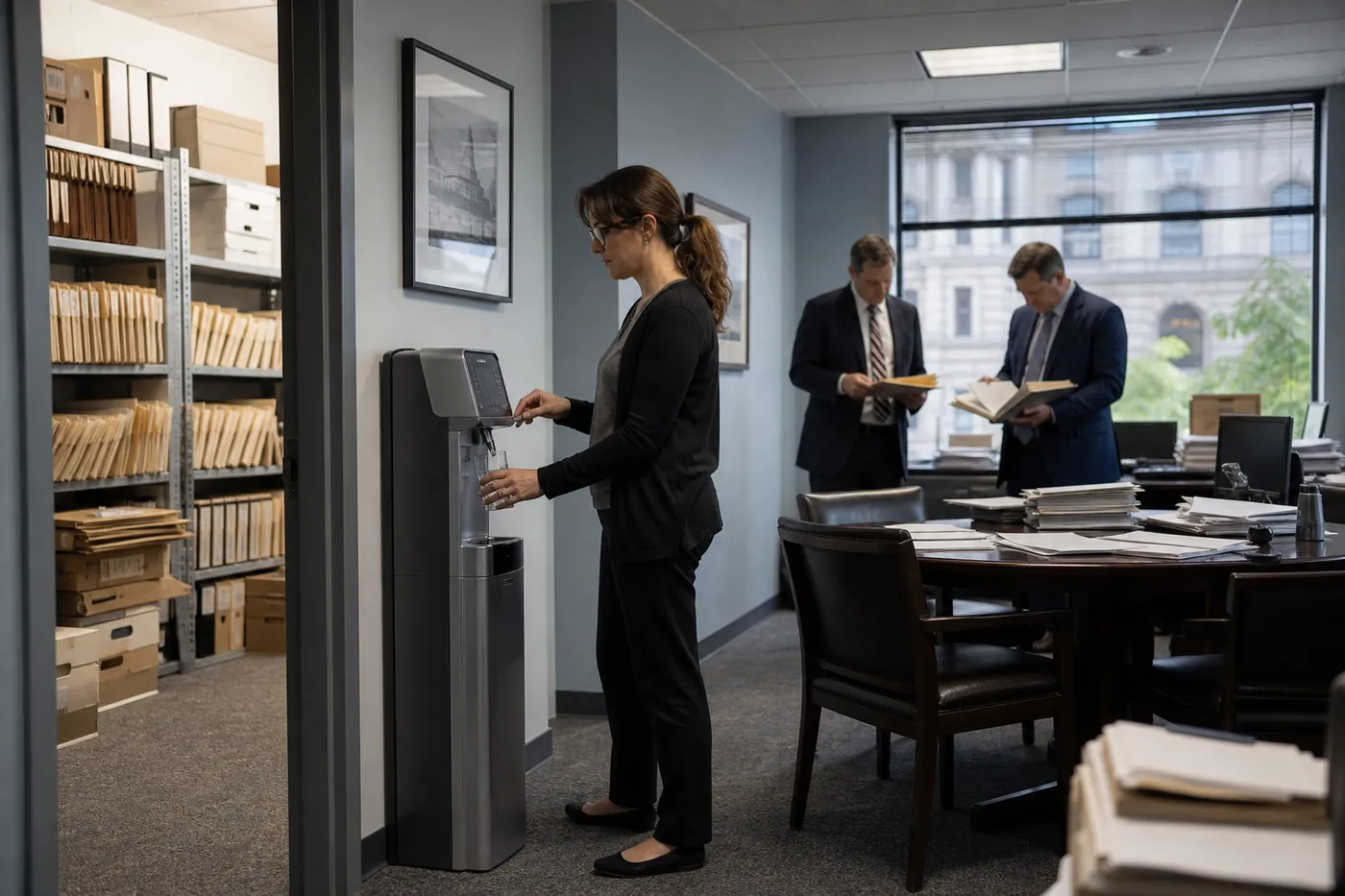
A law firm or professional office usually serves two audiences at once. Clients expect a calm, polished experience in reception and conference rooms, while employees need dependable everyday access near their work. One expensive dispenser in the lobby does not automatically satisfy both needs. Equipment noise, cup storage, hot-water safety, service access and the path employees take to refill bottles all affect the result.
Treat the decision as a facilities and workflow choice. The bottleless versus bottled comparison explains the operating differences. The water delivery pricing guide helps normalize recurring and first-year costs.
Start with the operating environment
Design client-facing and staff stations differently
Reception and conference areas benefit from quiet equipment, clean sightlines and an easy way to offer still water without interrupting a meeting. Staff kitchens typically need faster recovery, taller bottle-fill space and more durable controls. A single equipment specification may create unnecessary cost in one area and inadequate capacity in another.
Keep service away from confidential work
Technicians should not need unescorted access through file rooms, attorney offices or active conference areas. Choose serviceable locations and establish appointment, escort and after-hours rules. The water-line route should also avoid cabinets or walls that are difficult to inspect.
Review acoustics and interruption
Compressors, pumps and hot tanks can produce sound. Ask to hear or review the proposed model if it will sit near a conference room or quiet work area. Confirm how quickly the provider responds when a leak, unusual noise or temperature problem occurs.
Compare hospitality features with actual use
Hot water, sparkling water, portion controls and touchless dispensing can be useful, but each adds equipment and service considerations. Select features because they support client service or employee use, not because the proposal presents them as premium.
Read the agreement like an operating contract
Confirm installation, filters, sanitation, repairs, relocation, annual increases, renewal, removal and restoration. Professional offices often move or reconfigure; the agreement should explain what happens when a floor closes or a station must move.

Illustrative planning scenario: a Trenton professional firm
The following is a representative scenario, not a named-client claim. A mid-sized firm comparing Trenton office water service initially requested a premium unit beside its main conference room. During planning, the office manager noticed that sixty employees would use that same hallway after lunch. The final scope kept a quiet client-facing station near reception and placed a higher-throughput bottleless unit in the staff kitchen. Service visits were scheduled through facilities, with no access through the records room. The firm chose the arrangement because it separated hospitality from daily volume and protected confidential work areas.
Planning checklist
- List client-facing, staff-only and controlled-access areas separately.
- Measure peak employee demand and conference-room hospitality needs.
- Ask about operating noise, bottle-fill height and hot-water safeguards.
- Approve the technician route and service schedule before installation.
- Compare first-year and full-term cost, including moves and removal.
- Assign exterior cleaning, supply storage and issue reporting.
For additional facilities context, consult EPA water research resources. Apply outside guidance to the actual building, equipment and local requirements rather than treating a general resource as a substitute for a site review.
Frequently asked questions
Is bottleless water a good fit for a law office?
Often, especially where usage is steady and storage is limited. The building must have an approved water-line route, suitable power and a service plan that respects controlled spaces.
Should a conference room have its own dispenser?
Only when meeting volume and layout justify it. A nearby quiet station may serve clients well without adding equipment inside the room.
What contract terms matter when an office may move?
Review relocation charges, early termination, equipment removal, restoration and the ability to reduce or transfer service.
How can firms reduce service disruption?
Choose accessible equipment locations, keep unit records, define the dispatch contact and confirm temporary replacement procedures before signing.
Compare a complete service scope
A strong professional-office plan is discreet, easy to service and matched to both hospitality and staff use. Document the floor plan and operating priorities before requesting a water service quote.