Choosing an office water provider starts with the workplace, not a universal brand ranking. Headcount, attendance, floors, shifts, bottle storage, plumbing and water concerns determine what will work. A practical approach to how to choose an office water provider begins by describing those conditions.
Match equipment and capacity to actual use
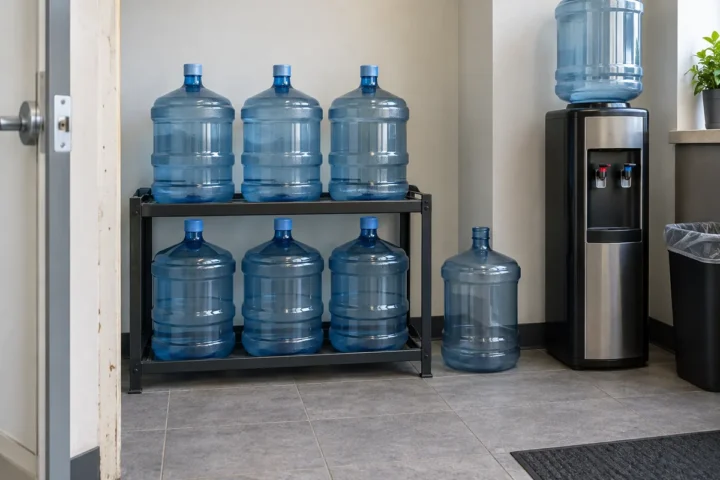
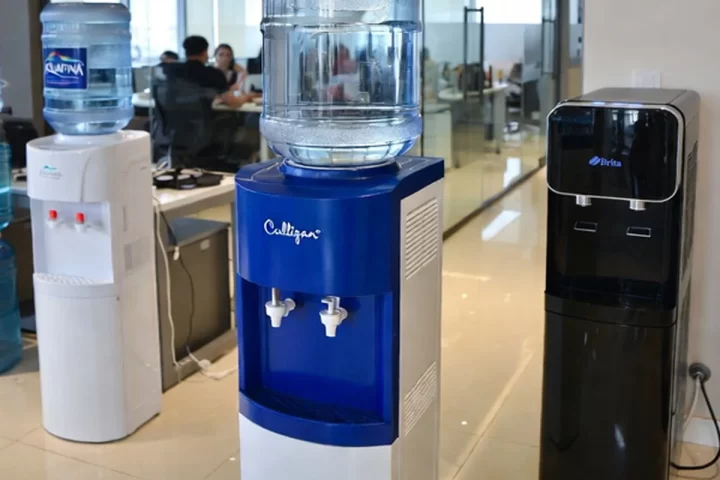
Decide whether the office needs bottled delivery, a bottleless cooler or another dispenser format. Measure peak use around breaks, shift changes and meetings. A cooler placed far from employees or a delivery plan that overwhelms storage can fail even when the equipment itself is reliable.
The office water service guide and pricing overview help compare system types and service scope.
Ask for a site-specific filtration and service plan
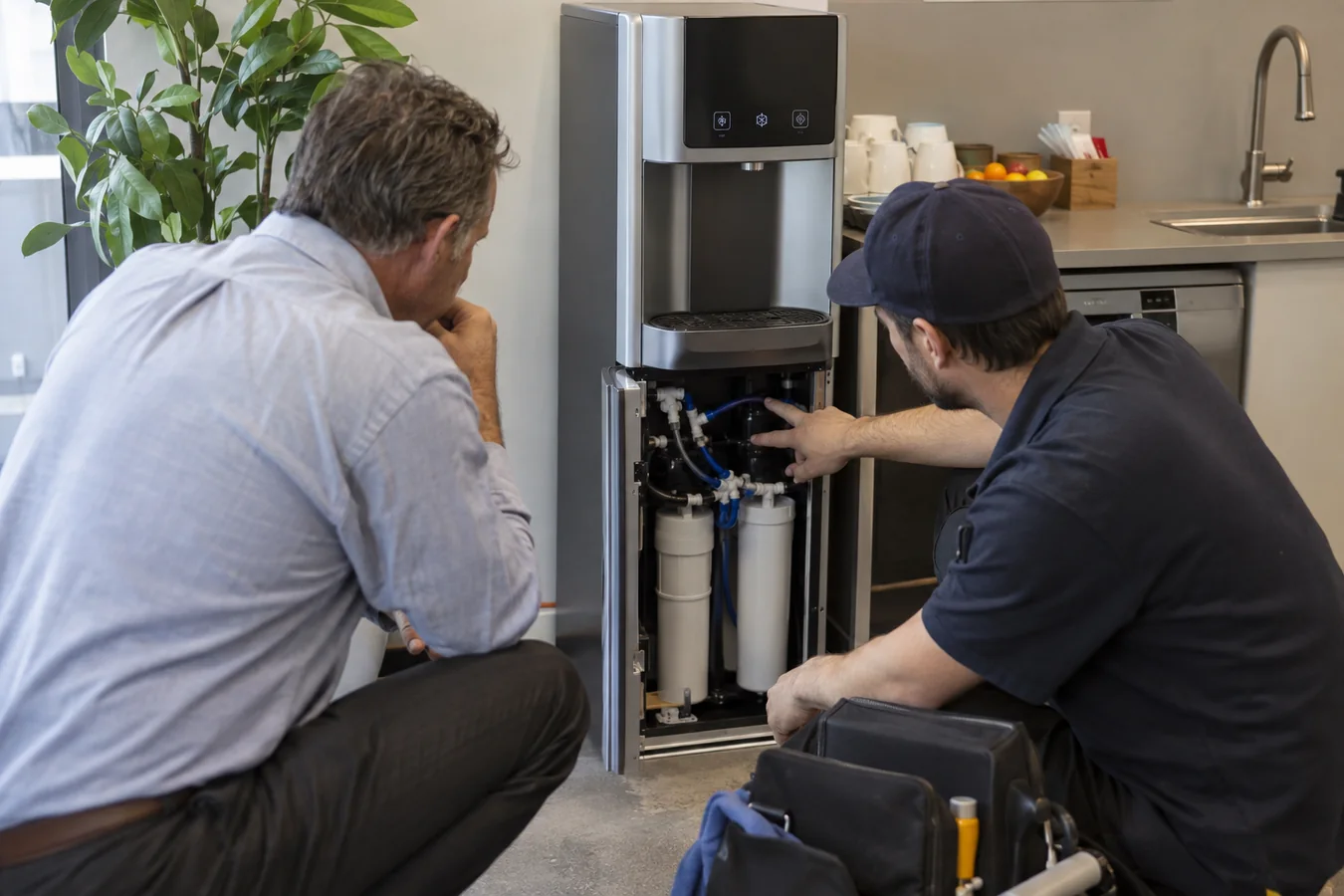
If bottleless equipment is proposed, ask what water concern the filtration addresses, how filters are selected and when they are replaced. Confirm installation route, power, drain requirements where applicable, leak protection and service clearance. Bottled service should define delivery frequency, bottle handling, storage and empty-container pickup.
Sanitation, preventive service and repair response belong in writing. The provider should explain what the customer cleans, what the technician services and how visits are documented. Review common questions in the office water FAQ library.
Compare local support and contract flexibility
Ask who services the location, how a failure is reported and what happens when equipment cannot be repaired promptly. Multi-location employers should understand which standards are consistent and which support details vary by market.
Review the office water contract terms and the monthly service cost guide. Include installation, filters, deliveries, repairs, moves and removal in the comparison.
The right provider should be able to explain why the proposed equipment, placement and service frequency fit the office. A familiar name or low base fee may be reassuring, but the stronger evidence is a practical site plan and a support process employees will not have to invent after installation.
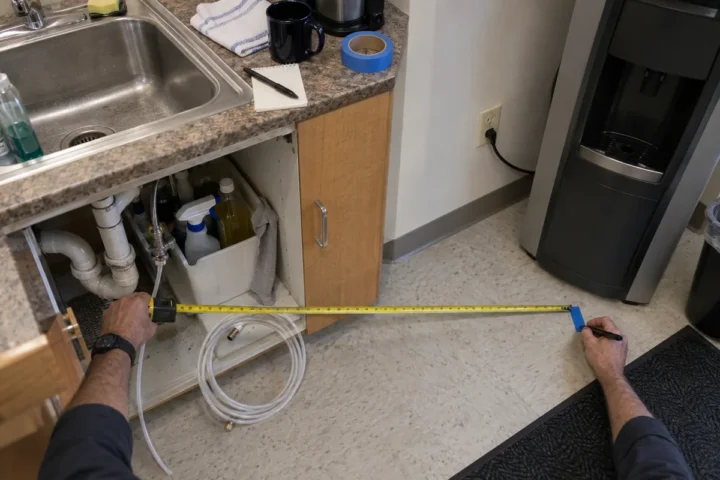
Ask for a pre-installation walkthrough and a written equipment schedule. Mark each placement, connection method and access route. The facilities contact should approve the plan before drilling, tubing or delivery. For shared or public areas, consider traffic, accessibility, noise and spill response rather than choosing the nearest open wall.
After startup, review consumption and service calls for the first few months. A provider should be willing to discuss whether capacity, delivery frequency or filter service needs adjustment. The original recommendation is a starting plan; measured use is the evidence for refining it.
Record the agreed adjustments.